
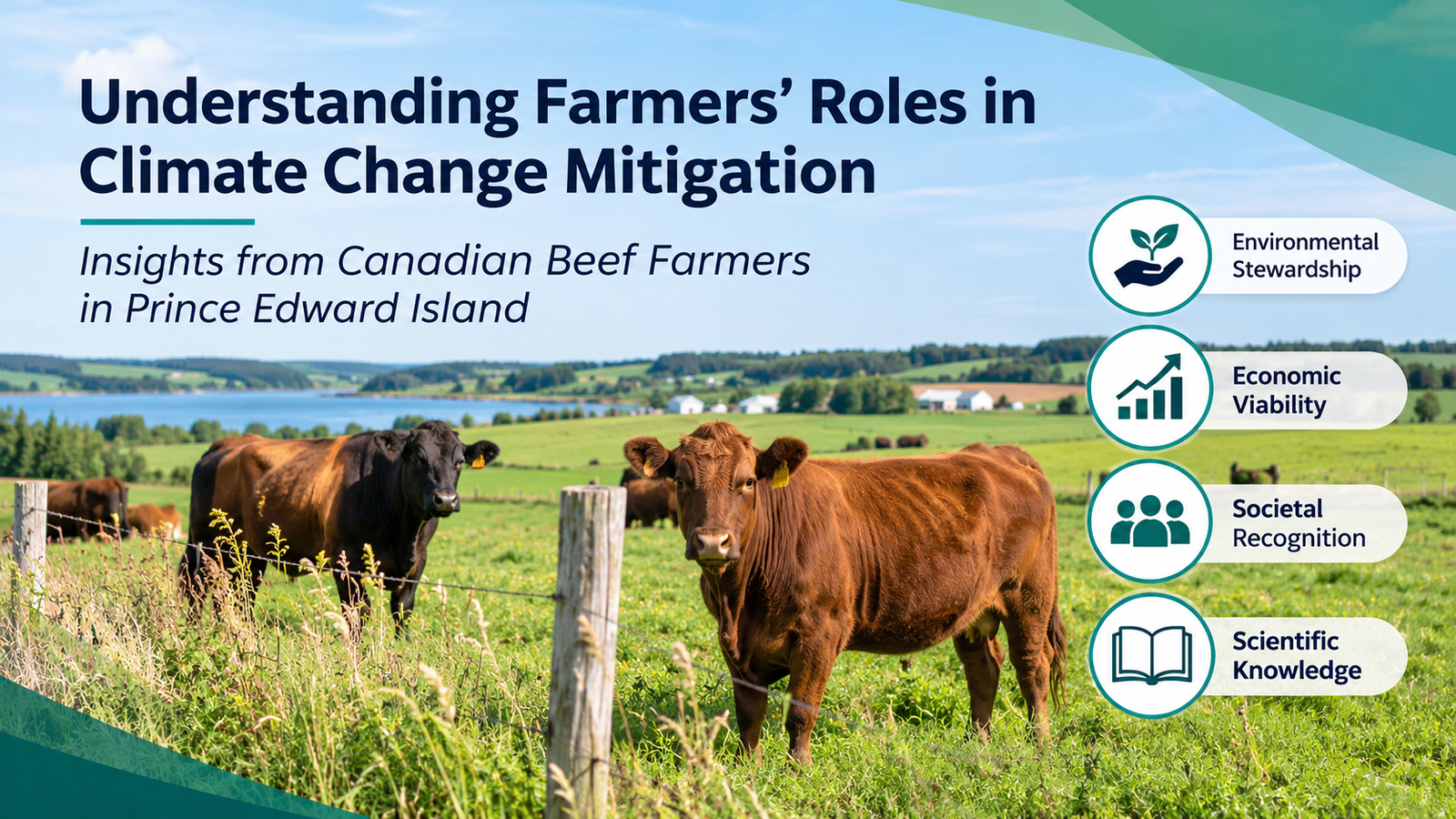
Understanding Farmers’ Roles in Climate Change Mitigation
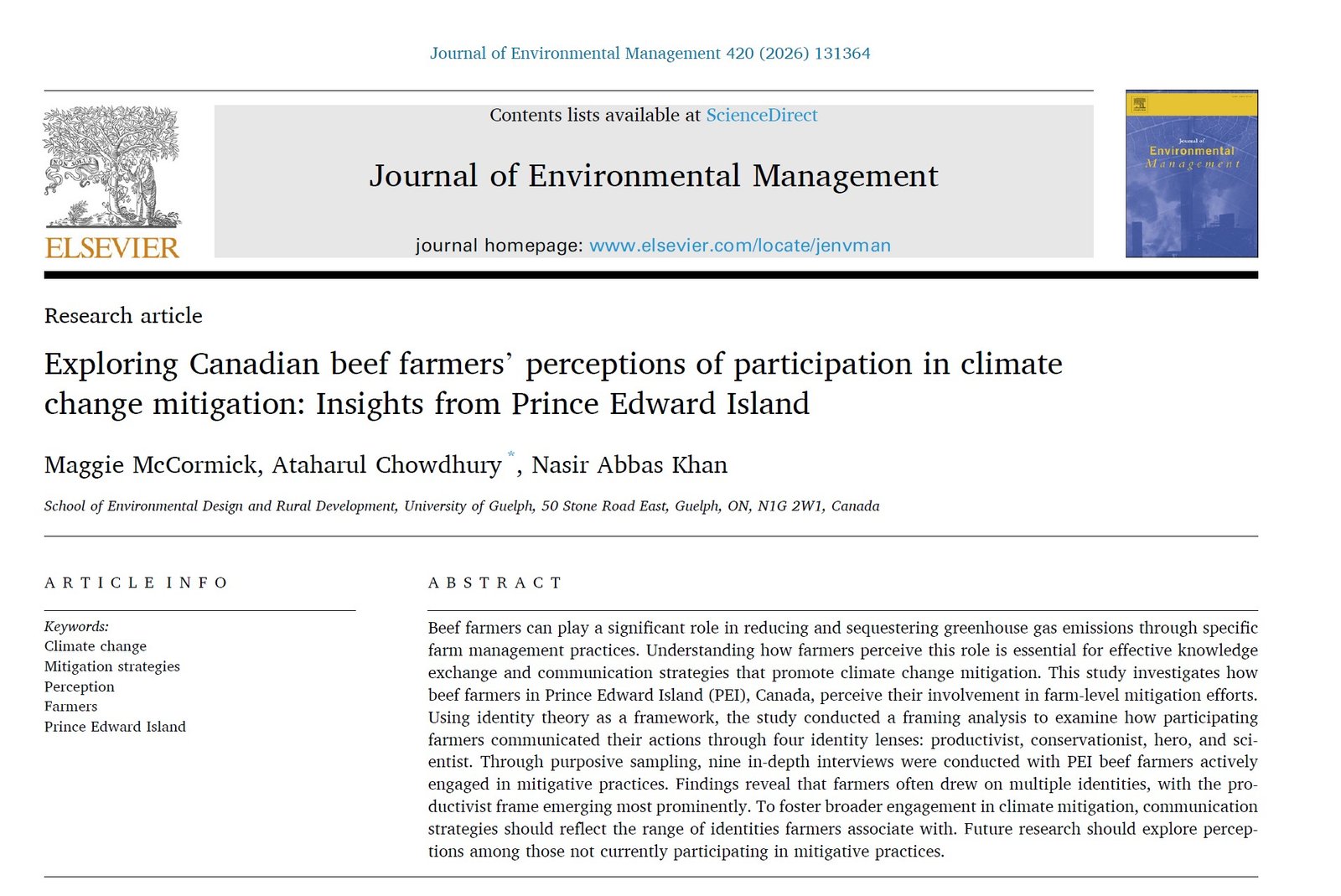
Understanding Farmers' Roles in Climate Change Mitigation: New Research from the University of Guelph
New research explores how Canadian beef farmers perceive their contributions to climate change mitigation and what these perceptions mean for effective communication, sustainable agriculture, and extension and advisory services.
A new study published in the Journal of Environmental Management examines how beef farmers in Prince Edward Island (PEI), Canada, understand and communicate their participation in climate change mitigation.
The research originated from the MSc thesis of Maggie McCormick in the Capacity Development and Extension graduate program at the University of Guelph. The research was conducted under the supervision of Professor Ataharul Chowdhury and published in collaboration with Nasir Abbas Khan.
Understanding Farmers' Perspectives
Farmers have significant opportunities to contribute to climate change mitigation through practices such as rotational grazing, improved soil management, and carbon sequestration.
Through in-depth interviews with nine PEI beef farmers, the researchers investigated how farmers frame their roles and responsibilities in climate change mitigation.
The study examined four identity frames: productivist, conservationist, hero, and scientist. Farmers frequently drew on multiple identities when describing their practices, with economic considerations emerging most prominently.
The findings also highlight how environmental stewardship, scientific knowledge, and perceptions of societal recognition influence farmers' understanding of climate action.
Implications for Extension and Advisory Services
The findings suggest that effective climate change communication needs to move beyond simply providing scientific information.
Extension and advisory approaches can benefit from recognizing farmers' existing knowledge, identities, experiences, economic realities, and motivations.
Strengthening dialogue, trust, peer-to-peer learning, and evidence-based decision-making can support communication and engagement approaches that better resonate with farmers.
Advancing Graduate Research and Innovation
This publication demonstrates how graduate research in Capacity Development and Extension contributes to understanding complex environmental and agricultural challenges.
It also highlights the importance of integrating social science perspectives into agricultural innovation, knowledge exchange, and efforts to advance sustainable agriculture and climate change mitigation.
